
The complete guide
How to Choose a Bike U Lock That Actually Keeps Your Bike
The problem with "I'll only be five minutes"
Almost every stolen bike story starts the same way. The owner stopped quickly, used whatever lock was nearest, and came back to an empty rack. Bike theft is rarely a planned heist. It is someone walking past with a tool in a bag, spotting the weakest bike on the street, and taking thirty seconds to free it.
That is why the lock you choose matters more than the bike you ride. A thousand dollar bike on a cable lock is easier to steal than a cheap bike on a 16mm shackle. Thieves pick targets by effort, not by value. Your job is to be the slowest, loudest, most annoying option on the rack.
A bike U lock does that by removing the two things a thief wants most: slack and room to pry. There is no loose loop to twist, no chain link to pop, no plastic coated cable to snip. Just a thick piece of hardened steel that has to be properly cut before anything moves.
How a U lock actually works
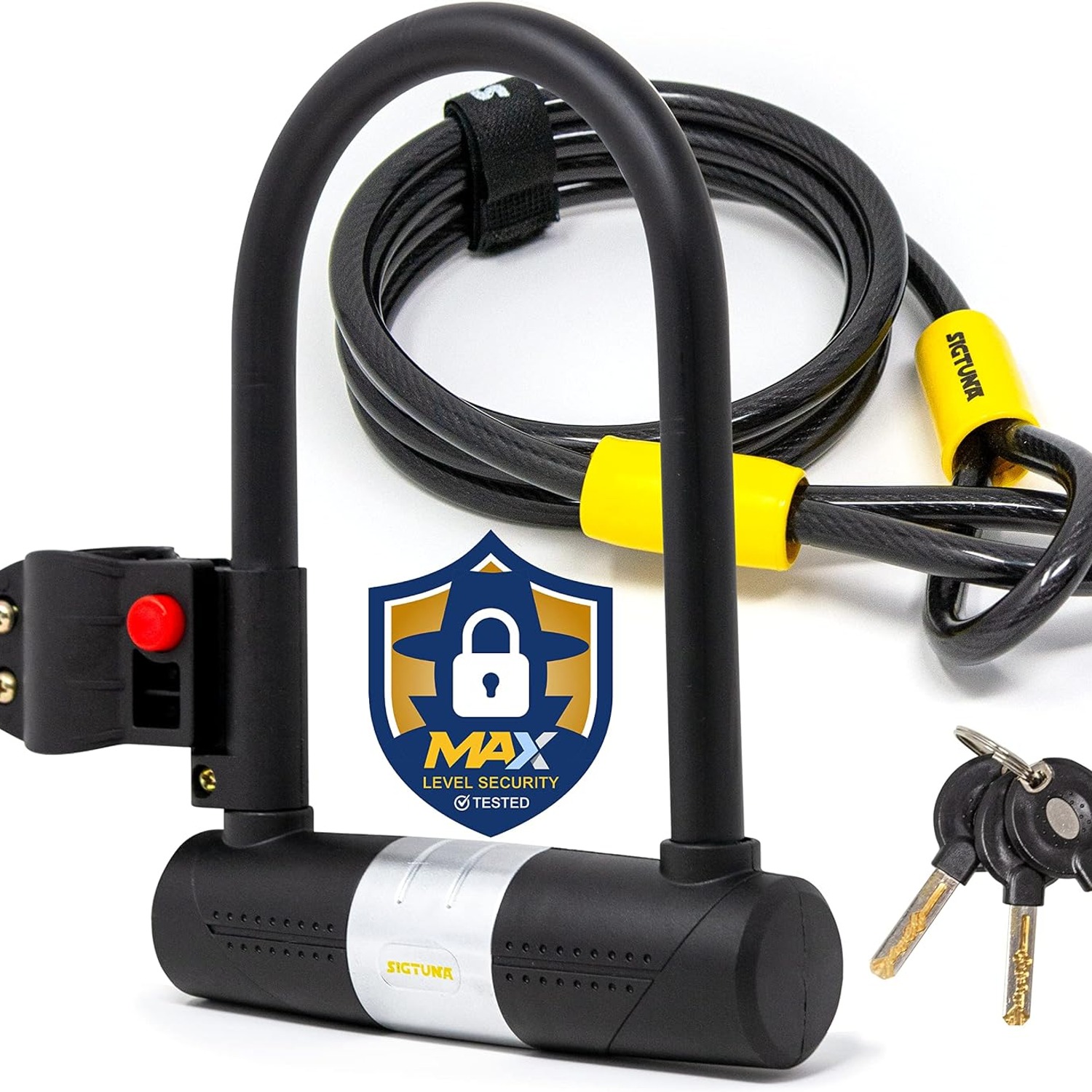
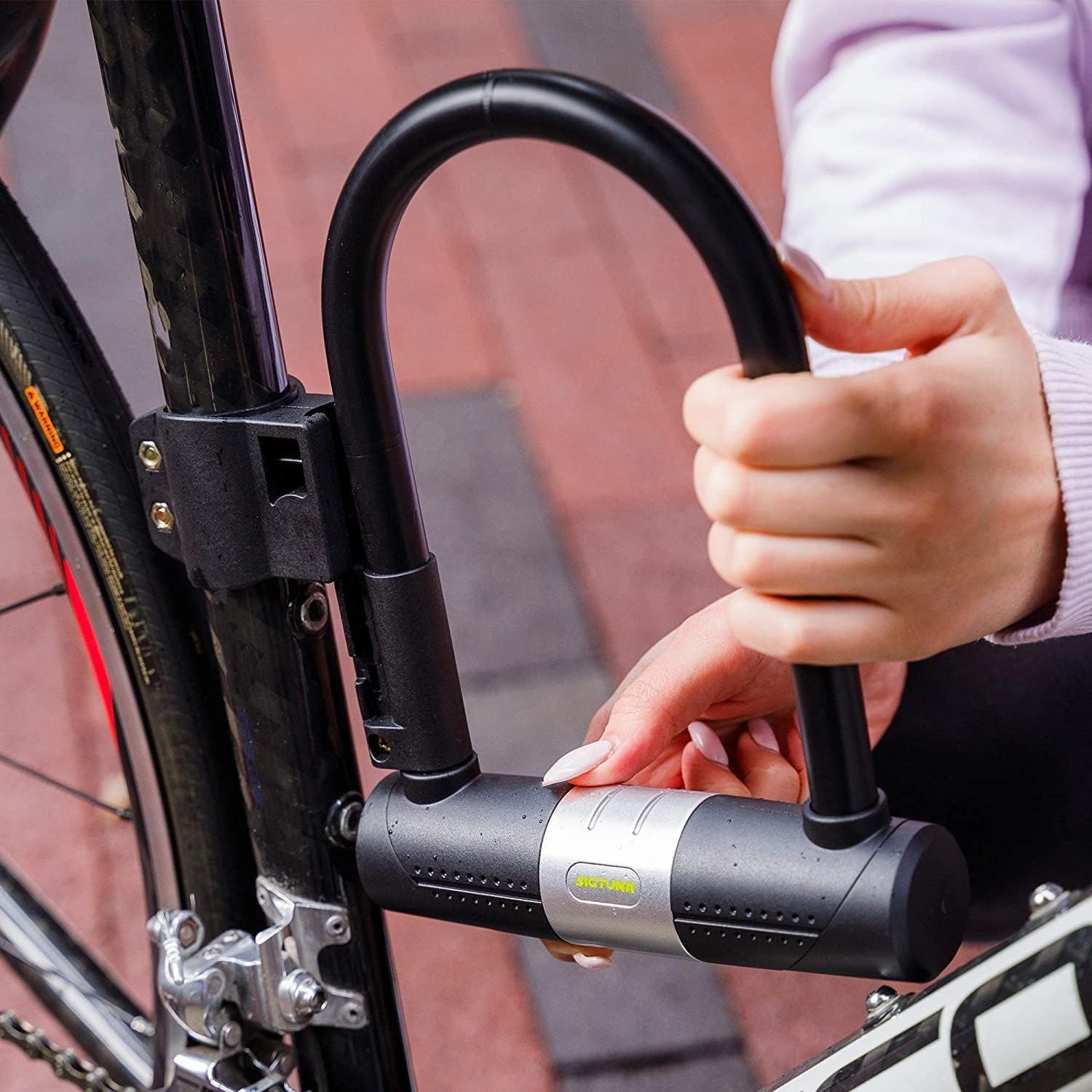
The shape is the whole point. A rigid U, sometimes called a D lock, slides around your frame and an anchor, then its two legs drop into a lock body that holds them in place. Because the steel does not bend, a thief cannot feed in a long pry bar and lever the lock apart with body weight. There is no gap to exploit if you lock it tight.
Three things separate a serious U lock from a token one.
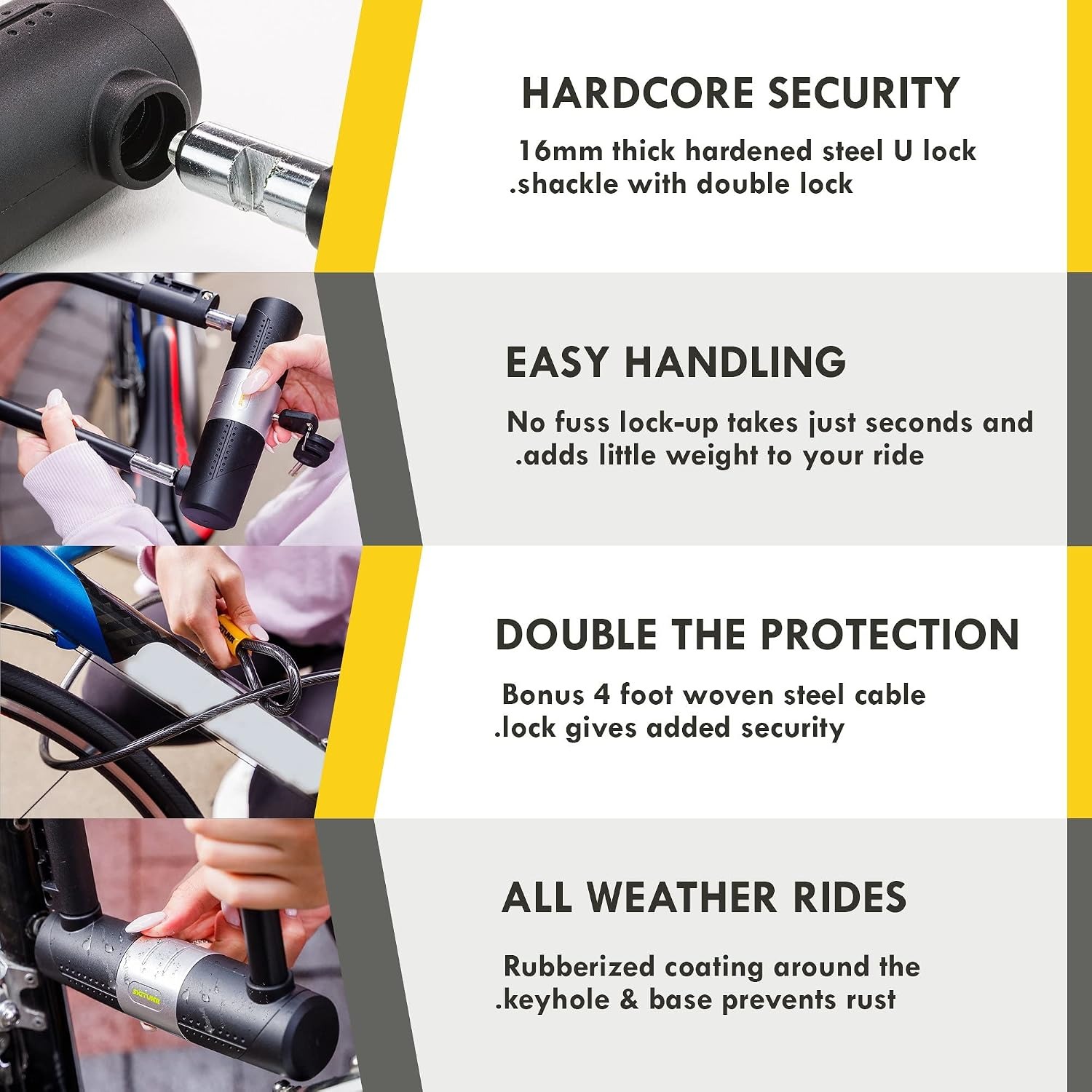
The first is shackle thickness. That number sounds small until you see what it means in practice. Compact bolt cutters, the kind that fit inside a jacket, physically cannot open wide enough or generate enough force to bite through 16mm hardened steel. A thief would need large, obvious tools and real time.
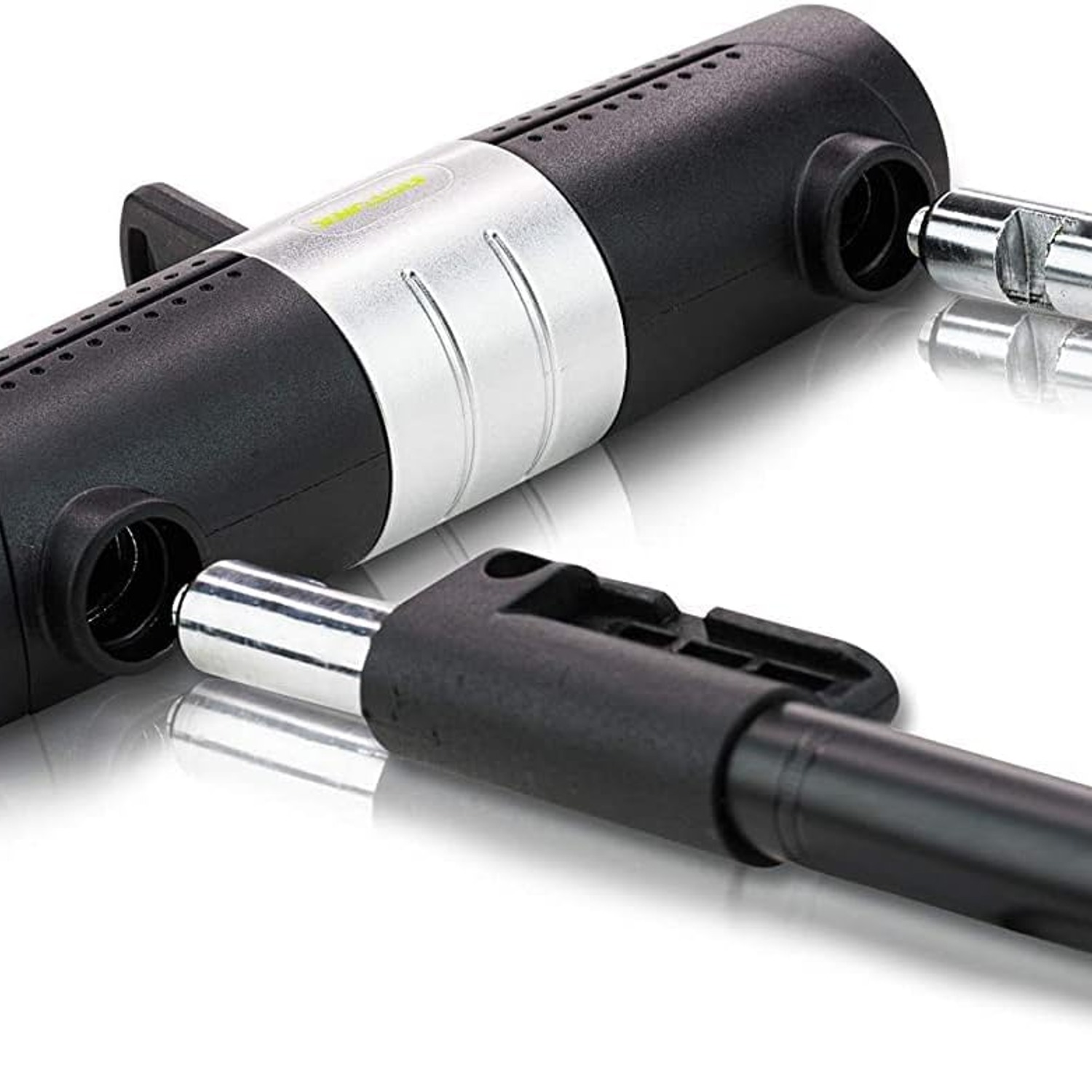
The second is the locking mechanism. This lock uses a double deadbolt, meaning both legs of the shackle lock into the body. Plenty of cheaper locks only bolt one side and rely on a hook or notch on the other. Cut one leg of those and the shackle rotates straight out. With two deadbolts, one cut achieves nothing. You have to do the work twice.
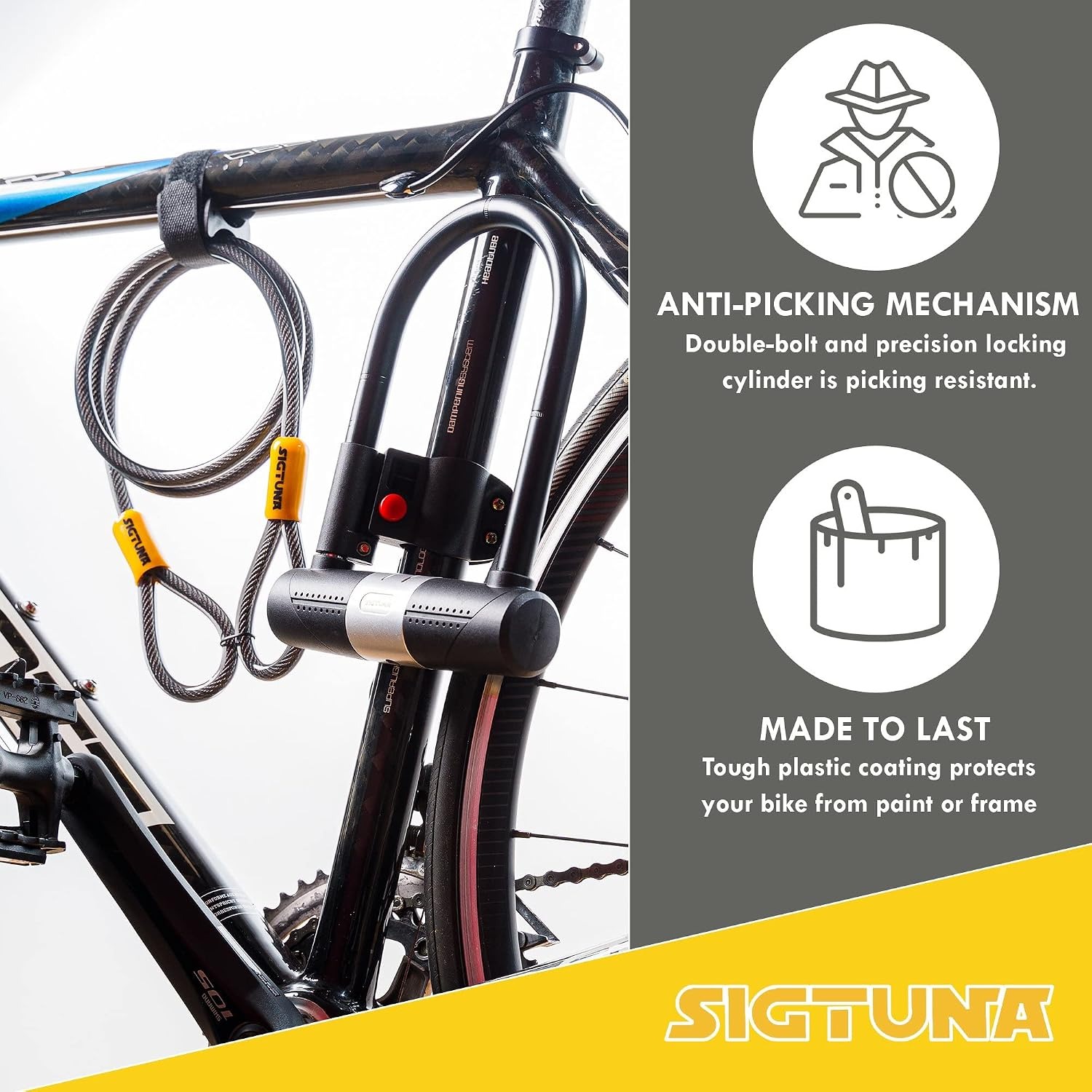
The third is the cylinder. This one uses a disc-style cylinder rather than a standard pin tumbler. Disc detainer mechanisms take proper tools and practice to pick, which rules out the casual attempt with a bent bit of wire. Combined with the double bolts, the easy attacks are closed off.
Who this lock suits
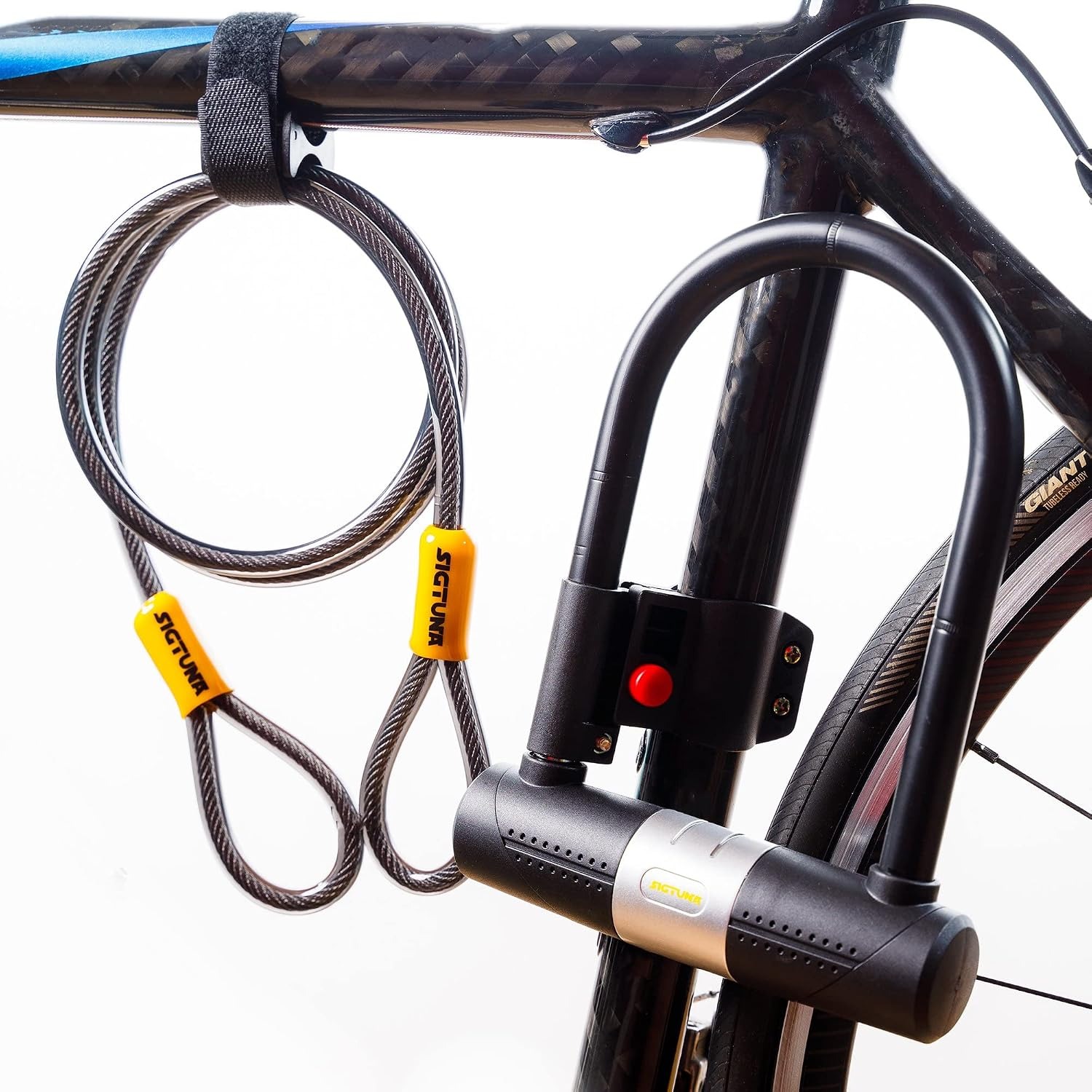
Daily commuters get the most out of it. If you lock up at a station, outside an office, or at a shopping strip several times a week, you need something that handles repeated public exposure. The frame bracket matters here more than people expect, because a lock that lives on the bike is a lock you always have. A heavier lock left in a drawer protects nothing.
Students are the other obvious group. Campus racks are a known hunting ground, bikes sit in the same spot for hours, and everyone knows the timetable. A heavy duty bike lock is the right call in that environment.
It also works beyond bicycles. The listing covers motorcycles, scooters, gates and fences. Riders use this style of lock through a wheel and around a solid anchor, and homeowners use them on gate hasps and storage areas. Anywhere a rigid steel loop can reach through a fixed point, it does a job.
If you only ever ride to a friend's garage and back, this is probably more lock than you need. Be honest about where you park. Risk is about location and duration, not about how much your bike cost.
Getting the size right
That distinction decides whether the lock is useful to you.
Mini U locks are light and very hard to lever, but they only reach a thin rack and a frame tube. Miss the right anchor and you are carrying a useless chunk of metal. A longer shackle reaches around thicker bike racks, square fence rails, a signpost base and motorcycle wheels. It gives you options when the ideal rack is already taken.
Before you buy anything, go and look at where you actually park. Is it a thin steel hoop, a chunky concrete-set post, a wooden fence rail? Measure roughly with your hands. A bike d lock long shackle like this one covers most street furniture, but nothing covers a wide brick pillar.
There is one trade-off with longer shackles. Extra internal space means extra room for tools. The fix is simple. Fill the gap. Get the frame, the rear wheel and the anchor all inside the U so there is as little free air as possible.
Using it well
Good technique doubles the value of any lock.
Always capture the frame. This is the single most common mistake. People lock a wheel to a rack, and the bike leaves without it. The standard method is to put the shackle through the rear triangle of the frame, through the rear wheel, and around the anchor. That one move secures your two most valuable parts.
Then use the cable. The 1.2 metre cable in the box threads through the shackle and loops out to your front wheel, or to a second bike if you are riding with someone. It is not armoured and it is not meant to be. It is there to make the easy extras less easy.
Keep the lock off the ground. A lock resting on concrete gives a thief a solid surface to hammer or lever against. Lock high on the frame where the whole thing hangs in the air.
Pick the anchor carefully. Check that it is set into the ground, cannot be unbolted, and cannot be lifted over the top. Sign posts without a sign on them are a classic trap, since the bike simply slides off the top.
Point the keyhole down when you can. It keeps rain and grit out of the cylinder, which is the main thing that shortens the life of any lock left outdoors.
Keys and the thing nobody plans for
Three stainless-steel keys come with the lock, and that is more useful than it sounds. Carry one. Put one in a drawer at home. Give the third to someone you trust, or keep it in a different bag. Security cylinders are not always easy to copy at a shopping centre key cutter, so these three keys may well be the only ones you ever have. Treat them that way.
If a key ever feels stiff, that is dirt or moisture, not failure. A little proper lock lubricant and a few turns usually fixes it. Do not force a key that will not turn. A broken key inside a cylinder turns a two minute job into a cut-the-lock-off job.
Looking after it
Maintenance is light. Wipe the lock dry after wet rides so road salt and grit do not sit on the finish. Once or twice a year, put a small amount of lock lubricant into the keyway and work the key in and out. Avoid thick grease and heavy oils, because they attract dust and eventually gum up the mechanism.
The PVC coating on the shackle protects your paint, so check it occasionally for splits. If the coating tears, a wrap of electrical tape stops the bare metal rubbing on your frame.
Store the lock in its bracket or in a bag rather than loose in a pannier, where it will knock around and chip things.
The short version
A 16mm hardened steel shackle, a double deadbolt that locks both legs, and a disc-style cylinder together rule out the quick, quiet attacks that account for most bike theft. The long shackle reaches real world anchors, the included cable covers your front wheel, and the frame bracket means the lock comes with you instead of staying home.
It weighs 1.41 kg. That weight is the whole point. If you park in public, on the street, at a station or on campus, it is weight worth carrying. Lock the frame, fill the gap, choose a solid anchor, and keep a spare key somewhere sensible.