Bike Stand Company
Company
Shop By Category
T&Cs
Shop Online
  • Free delivery across Australia on orders over $60
  • Wall racks, floor stands, work stands and accessories in one place
  • Dispatch within 2 working days, then delivery in up to 7 working days by tracked courier
  • Tracking number emailed as soon as your order ships

Bike Tow Dog Leash | Dog Bike Leash Attachment | Hands Free Bicycle Dog Leash

Bike Tow Dog Leash

$139.99
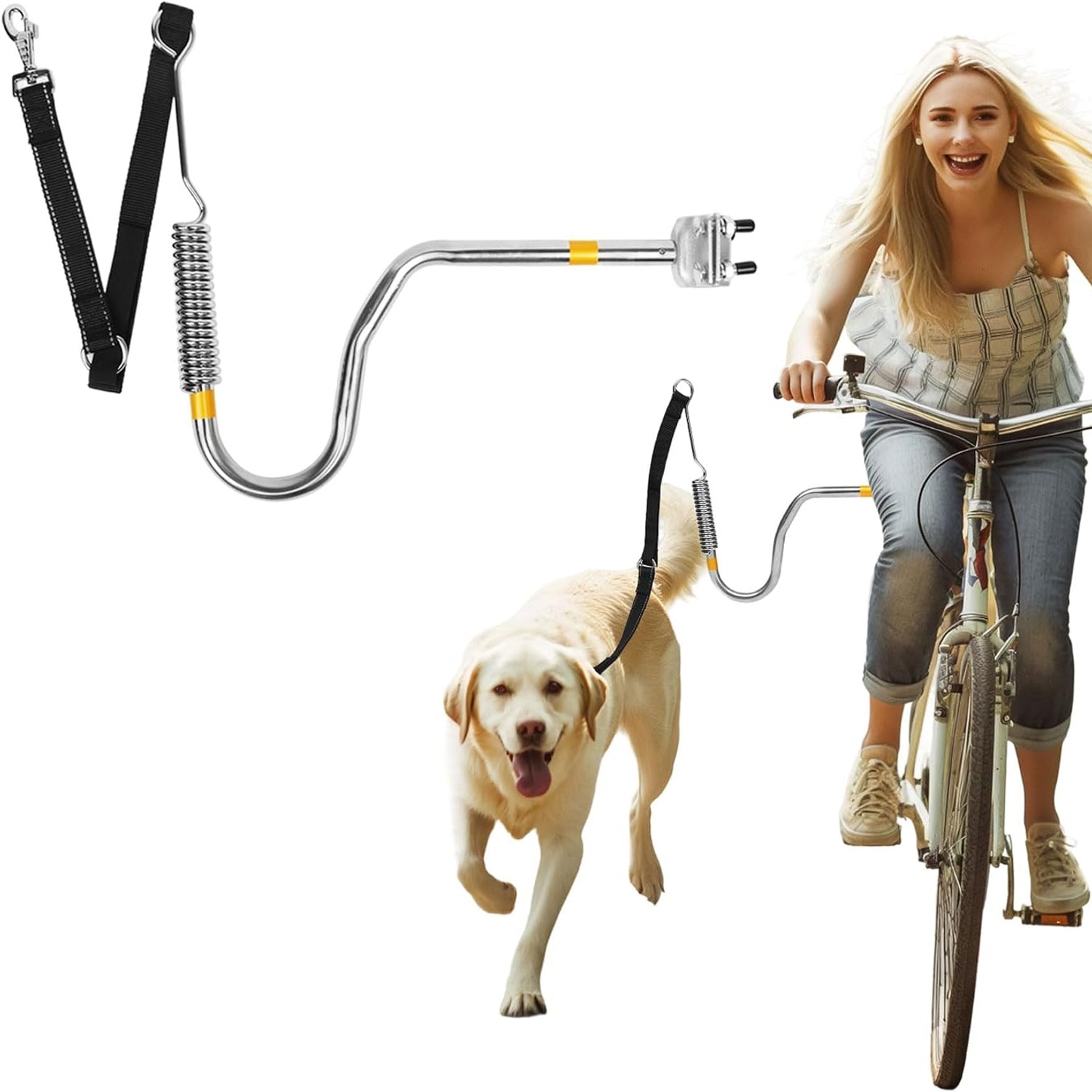
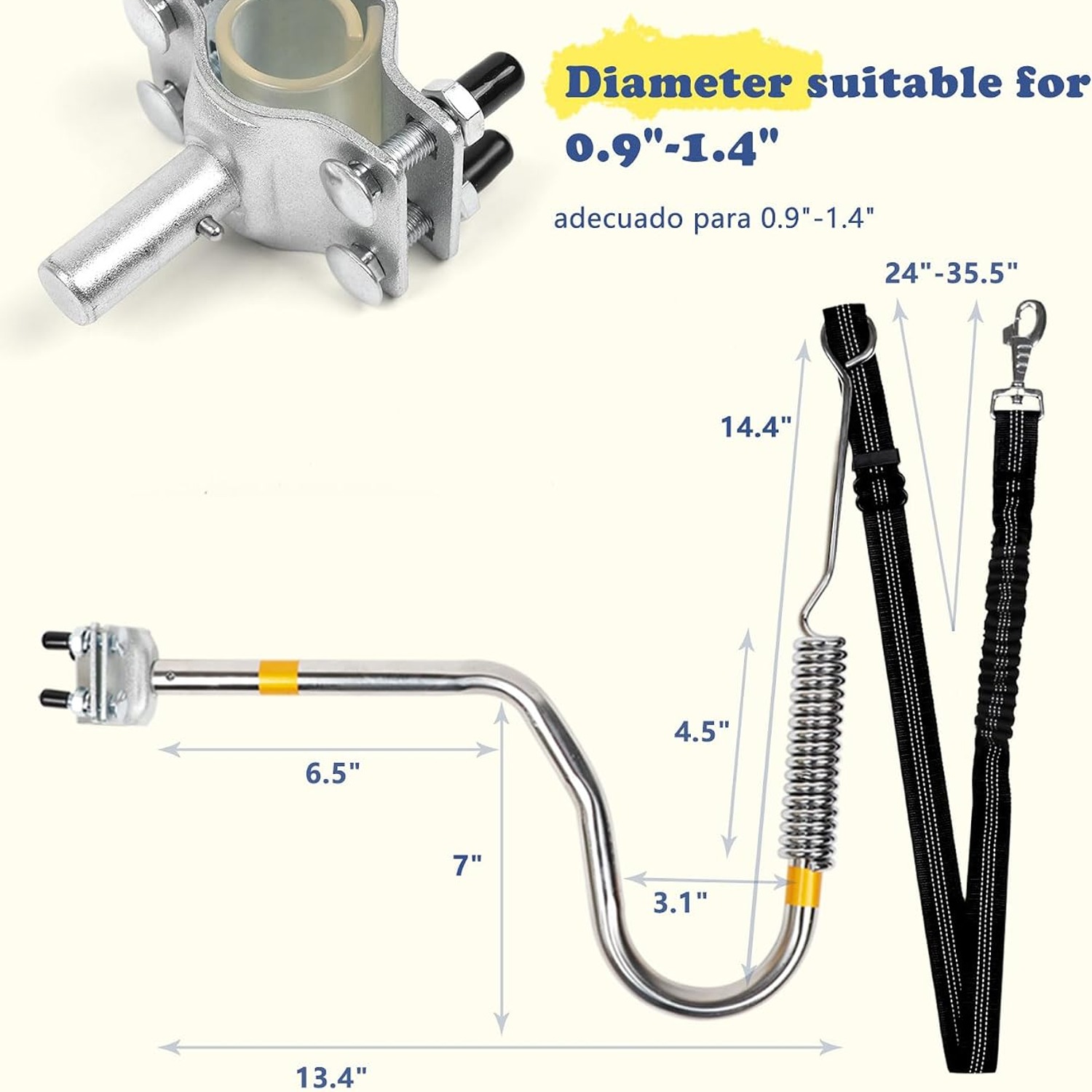
  • High-Mounted Arm
  • Shock Absorption
  • Adjustable Length
  • Steel And Nylon

Price: $139.99

  • Delivery time: up to 7 working days by tracked courier, after dispatch within 2 working days
  • Free delivery across Australia on orders $60+, otherwise a flat $25
  • Pay by card or PayPal, handled by the payment provider
  • 15 days to change your mind, plus your Australian Consumer Law guarantees
Product specifications
Dog Breed SizeLarge
Item Length24 Inches
Item Width14.9 Inches
Pet TypeDog
Country Of OriginChina
Included Componentsbicycle dog leash attachment
Item Typebicycle dog walker
Item Weight2 Pounds
Target SpeciesDog
SizeUp to 50kg
Material TypeNylon, Stainless Steel
Closure TypeElastic
ColourSilver
MaterialNylon, Stainless Steel
Product Dimensions42.9L x 37.8W centimetres
Weight0.91 kg
Shipping & returns

Tracked delivery anywhere in Australia. It is free on orders of $60 or more, and a flat $25 below that. Allow up to 7 working days in transit after dispatch within 2 working days.

This shop's own returns policy gives you 15 days from purchase to change your mind, on every product it sells. Send it back in its original packaging with proof of purchase and we refund the price you paid for the goods, processed within 24 to 48 hours of the return arriving. You cover the cost of returning it unless the item is faulty.

If it arrives faulty, damaged or not as described, we put it right at no cost to you under the Australian Consumer Law's consumer guarantees, return postage included.

Shipping details · Refunds and returns

Looking after it

Rinse road grit off the steel arm and spring after a wet ride and let it dry before storing. Check the clamp bolt is tight before every ride.

High-Mounted ArmSits well clear of the ground and pedals so the lead cannot tangle mid-ride.
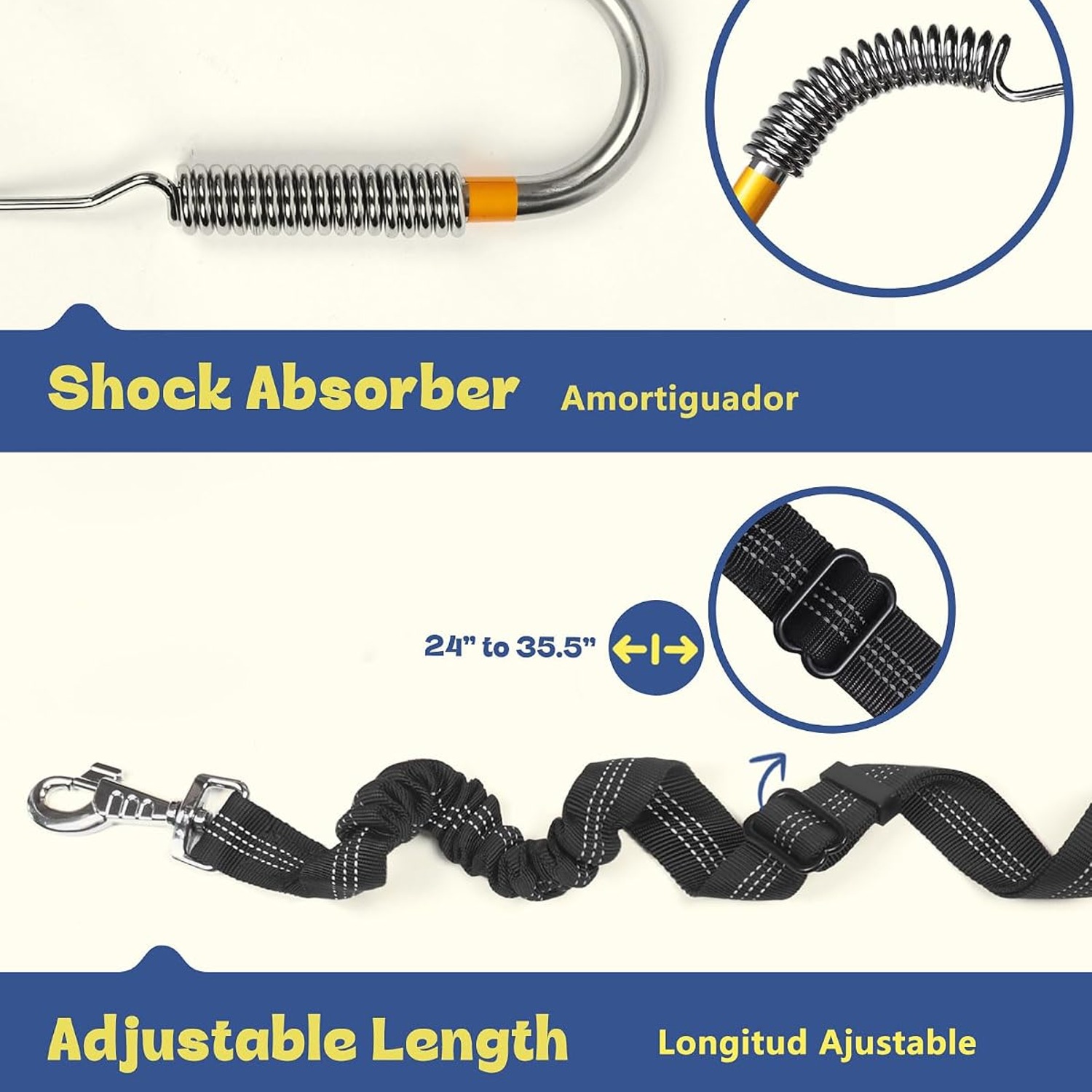
Shock AbsorptionA sprung section softens sudden pulls instead of passing them to the frame.
Adjustable LengthShorten it for close control or let it out for a more relaxed run.
Steel And NylonStainless steel body paired with a high-strength nylon lead.

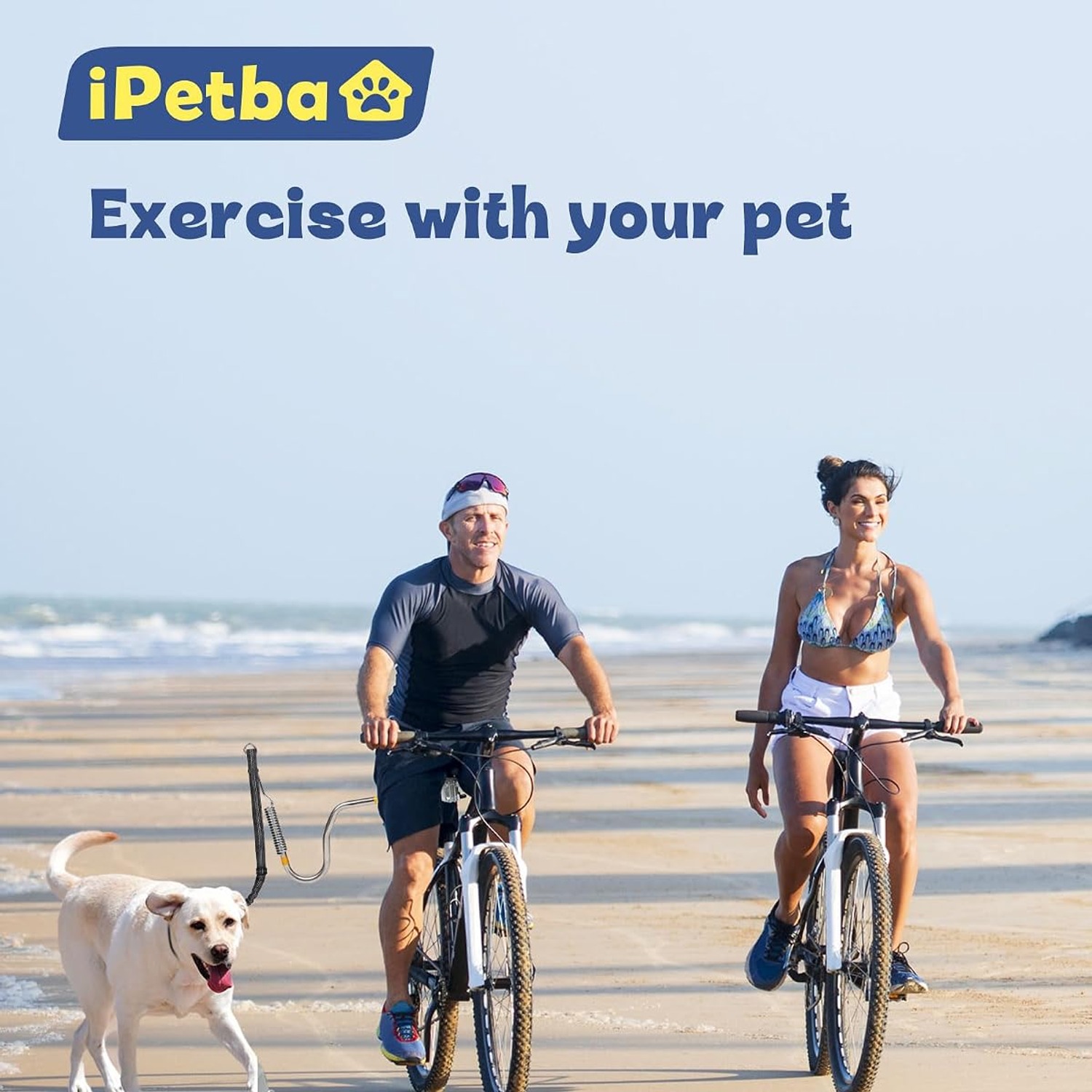
Ride and run together with a bike tow dog leash that keeps both hands on the bars and your dog at a safe, steady distance.

A high-mounted stainless steel arm, shock-absorbing spring and adjustable nylon lead combine to soak up sudden pulls, clear the pedals and fit most bike frames on either side.

A bike tow dog leash that mounts under the saddle and holds your dog at a fixed, predictable distance from the rear wheel.

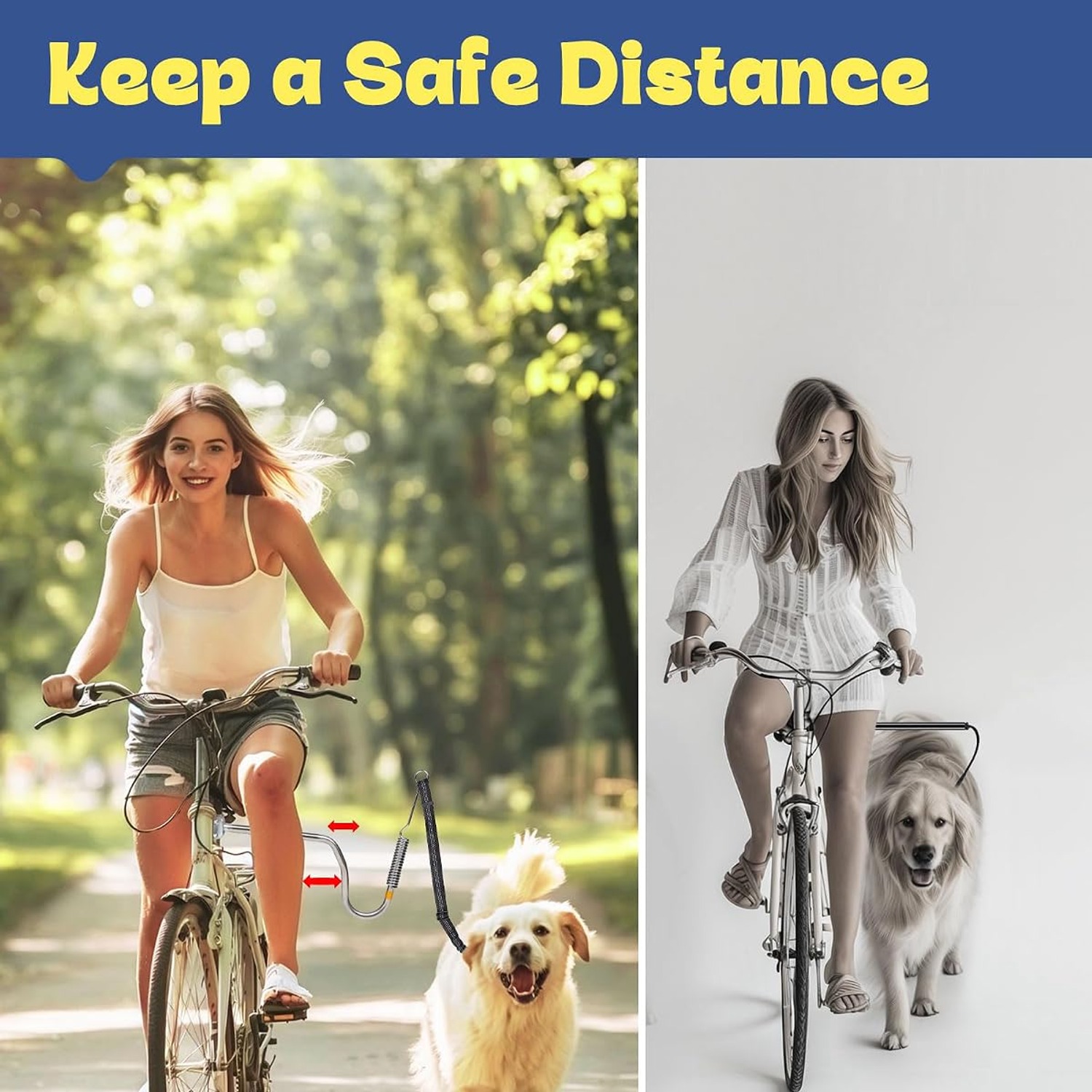
The high-mounted arm keeps the lead above pedal height, so there is far less chance of a tangle when your dog drifts in close.

A shock-absorbing spring takes the sting out of sudden lunges, which means fewer wobbles for you and less jolting for your dog.

The nylon lead adjusts in length, so you can keep a new dog tight to the bike or give a confident runner a bit more room.

Built from stainless steel and nylon and rated for dogs up to 50 kg, it fits regular, touring and mountain bikes on either side.

Bike Tow Dog Leash

Cycling with a dog on a hand-held lead is a known recipe for trouble. One squirrel, one parked car, one unexpected pull, and the bars go sideways. This bike tow dog leash moves the job from your hand to the frame. The mount fixes under the saddle, the arm reaches out and down, and the lead clips to your dog's harness at a set distance. Both hands stay on the bars where they belong.

Bike Tow Dog Leash

The arm is high-mounted rather than sitting low near the axle. That matters more than it sounds. A low lead can swing into the pedals, the chain or the rear spokes when a dog cuts in. Holding the attachment point higher keeps the nylon lead above that zone, so the line stays clear even when your dog wanders a little closer than planned.

Bike Tow Dog Leash

Between the mount and the lead sits a shock-absorbing spring. When a dog lunges, that energy has to go somewhere. Without a spring it goes straight into the bike as a sharp tug on the saddle rail. With one, the pull is spread over a longer moment and softened at both ends. Your line stays straighter and your dog's harness gets a gentler stop.

Bike Tow Dog Leash

Materials are plain and sensible. The body is stainless steel for a solid, weather-tolerant base, and the lead is high-strength nylon that stays light without feeling flimsy. The maker rates the nylon rope at up to 1,000 lbs of pull and sizes the attachment for dogs up to 50 kg, which puts most medium and large breeds comfortably inside its range.

Bike Tow Dog Leash

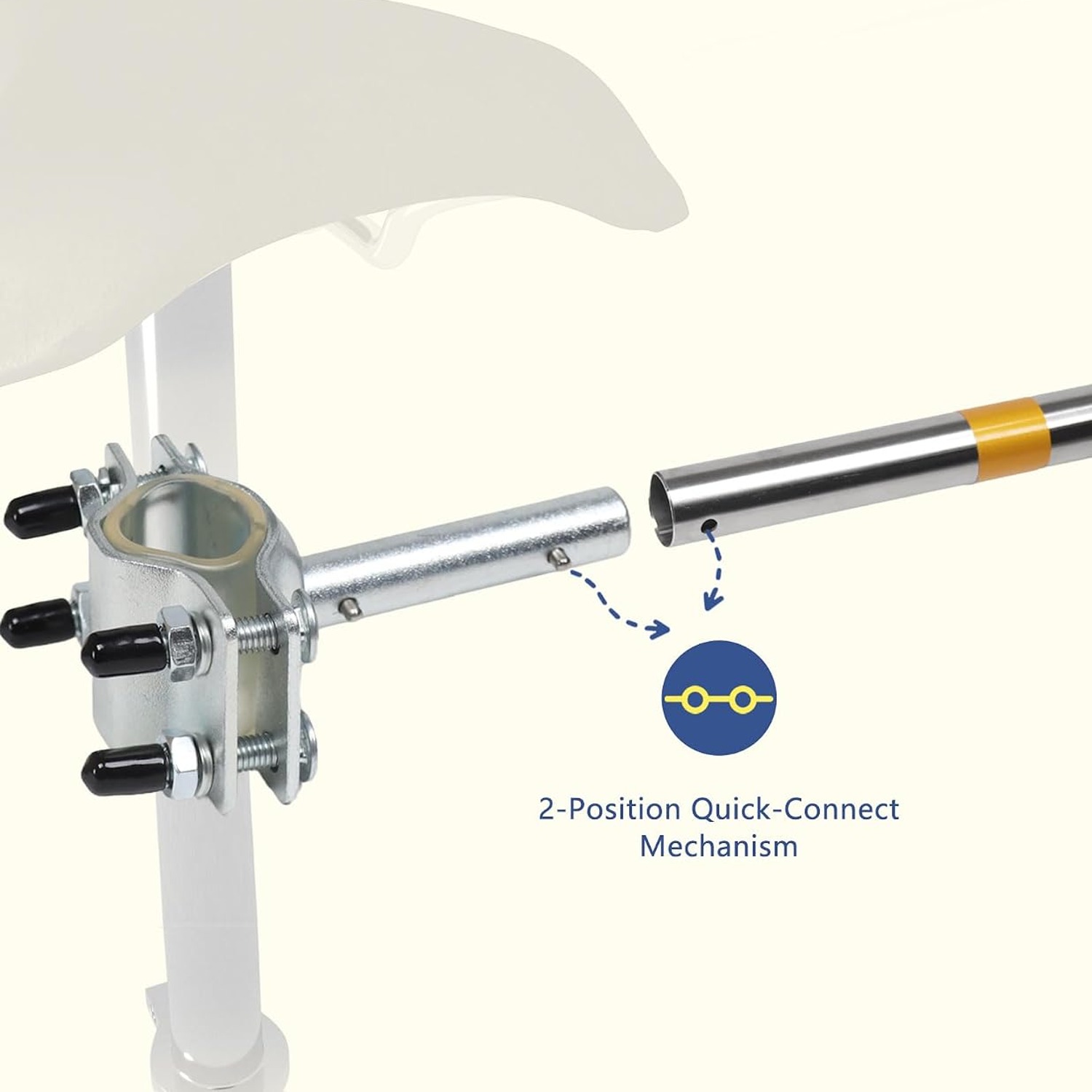
Fitting is a short job. The mechanism clamps under the seat, the spring attaches to the rod, and the lead connects to the spring and then to your dog. It suits regular, touring and mountain frames and can be installed on either the left or right side, so you can set it up on the kerb side of the road wherever you ride. An installation manual is included in the box.

What do our customers say?

Company-wide reviews published on Trustpilot. Every public rating is included.

3.6 Based on 19 reviews Trustpilot

All 19 public reviews are shown without a star-rating filter. See the live profile on Trustpilot.

Not sure yet? That is fine.

You can change your mind. This shop's own returns policy gives you 15 days from purchase to send it back in its original packaging with proof of purchase, and we refund the price you paid for the goods.

If it turns up faulty, damaged or not as described, that is on us. The Australian Consumer Law covers you, we pay the return postage, and you can have a repair, a replacement or your money back. Read the full detail on our refunds and returns page, or ask us anything before you order.

Frequently Asked Questions

What exactly is a bike tow dog leash?

It is a rigid attachment that fixes to your bicycle and holds your dog's lead at a set distance from the frame. Instead of gripping a lead in one hand, the bike takes the load. That leaves both your hands free for steering and braking.

Where on the bike does it mount?

The mechanism fixes under the bike seat. From there the arm extends out and down, and the spring and lead connect in sequence. An installation manual is included so you can follow the order of assembly.

Can I fit it on either side of the bike?

Yes. The attachment can be installed on the left or right, so you can run your dog on the footpath side of the road in whichever country you ride. Swapping sides is a matter of re-mounting the arm the other way.

What size dogs is it suitable for?

The maker rates it for dogs up to 50 kg and classes the breed size as large. That covers most medium and large breeds. Very small dogs may be better suited to a gentler walking setup rather than a bike run.

What is it made from?

The body is stainless steel and the lead is high-strength nylon. Stainless steel handles weather and road spray better than untreated metal, and the nylon keeps the lead light. The closure type is listed as elastic.

How does the shock absorption work?

A sprung section sits between the bike mount and the lead. When your dog pulls suddenly, the spring stretches and spreads that force over a longer moment. The result is a softer stop for the dog and far less of a jolt through the bike.

Why is a high-mounted design better?

A low mounting point puts the lead near the pedals, chain and rear spokes, which is where tangles happen. Holding the attachment higher keeps the line above that area. It is one of the main reasons people look for the best dog bike leash attachment rather than improvising with a rope.

Is the lead length adjustable?

Yes, the nylon lead adjusts so you can set how far your dog runs from the bike. A shorter setting gives tighter control while a dog is learning. A longer setting gives a confident runner a more natural stride.

Should I clip it to a collar or a harness?

Always use a well-fitted harness. A collar concentrates any pull on the neck, which is not appropriate when a bike is involved. A padded chest harness spreads the load across the body and is the standard choice for any dog leash for bike riding.

Can I use it with two dogs at once?

This is a single-dog attachment with one lead and one connection point. Running two dogs from one bike adds a lot of unpredictability. Stick to one dog per bike for safety.

Will it fit my mountain bike?

It is listed as fitting regular, touring and mountain bikes. The key requirement is a saddle with accessible rails under the seat for the mount to clamp onto. Check that your seatpost area is clear of bags or racks before fitting.

Does it work on an e-bike?

The mount itself does not care what drives the bike, so if your e-bike has a standard saddle it should fit. What matters more is your speed. E-bikes make it easy to go faster than a dog should run, so keep the pace honest.

How fast should I ride with my dog attached?

Match your dog's comfortable trot, not your usual cruising speed. For most dogs that lands in a slow to moderate range where they are moving steadily without straining. Watch their gait and stop before they look laboured.

How long can a dog run alongside a bike?

Start with five to ten minutes and build over weeks. Fitness, age, breed and heat all change the answer. Short, frequent sessions beat one long ride every weekend.

Can puppies use it?

No. Growing joints are not ready for sustained road running, and most vets suggest waiting until a dog is fully grown. Walks and off-lead play are better for puppies. Ask your vet for a specific age for your breed.

Is it safe on hot days?

Road and footpath surfaces heat up quickly and dogs have no shoes. Ride early morning or in the evening when the ground is cool, and press the back of your hand to the surface for a few seconds to test it. Carry water for both of you.

What comes in the box?

The package includes the bicycle dog leash attachment and an installation manual. It is listed as one unit, one pack. You supply the harness.

How heavy is the attachment?

The listed item weight is 907 g and the shipping weight is 0.91 kg. On the bike that is barely noticeable once fitted. It sits low and central, so it does not upset handling.

What are the dimensions?

Product dimensions are listed as 42.9 cm long by 37.8 cm wide, with an item length of 24 inches and width of 14.9 inches. Those figures describe the assembly rather than a single part. Allow a little clearance beside the bike when storing it.

What colour is it?

Silver, in a solid pattern. The silver finish matches the stainless steel construction and blends with most bike hardware. No other colour is listed by the maker.

How do I clean it?

Wipe the steel arm and spring with a damp cloth after wet or muddy rides and dry it so water does not sit in the joints. The nylon lead can be hand washed in warm soapy water and air dried. Avoid harsh solvents on either part.

Does it need any maintenance?

Run a quick check before each ride. Look at the mounting bolts, the spring and the clip for looseness, fraying or corrosion. Tighten what needs tightening and replace the lead if the nylon shows significant wear.

Can I leave it on the bike permanently?

You can, though storing the bike under cover will keep the hardware in better shape. If you lock the bike in public, consider removing the lead. The arm itself is fine to stay fitted between rides.

Will my dog need training first?

Yes, and it is worth the time. Walk the bike beside your dog first with the lead attached and no riding. Then try short, slow rides on quiet ground before any road use. Most dogs settle into a bicycle dog walker routine within a few sessions.

What if my dog pulls hard to one side?

The rigid arm and spring are designed to resist exactly that, but a dog that constantly pulls needs more groundwork before road riding. Practise in an open space and reward your dog for holding a steady line. Slower speeds also reduce the urge to chase.

Does it affect how the bike handles?

You will feel the extra width and a little side load, especially at low speed. Most riders adjust within a ride or two. Taking the first few corners wide and slow helps you learn the new footprint.

Is this a good gift for a cyclist with a dog?

It is a practical one. Anyone who has tried to hold a lead while riding understands the problem instantly. Pair it with a padded harness and it makes a complete set.

How long will delivery take?

We dispatch within 2 working days. Delivery then takes up to 7 working days by tracked courier, anywhere in Australia. It is free on orders over $60 and a flat $25 below that, shown in your basket before you pay. You get tracking details by email once the parcel is dispatched.

Can I return it if it does not fit my bike?

Yes. If the mount does not suit your saddle or frame, contact us and we will walk you through the return under our refunds and returns policy. Keep the box and the manual, and do not fit it to the bike until you have checked it against your seat post, because an unused item is the simplest return.

What if it is not right for us once it arrives?

Get in touch and describe the issue, whether it is fit, size for your dog or something that arrived damaged. We will sort out a replacement or a return depending on what makes sense. Nobody wants you riding with gear that does not suit your dog.

How To Choose And Use A Bike Tow Dog Leash

6 min read Bike Stand Company

The problem with holding a lead while riding

Most people try it once. You take the dog out, grab the lead in your left hand, and set off. For about two minutes it feels fine. Then a cat appears, or a gate slams, or your dog decides the gutter smells interesting, and the whole bike pivots around your wrist.

The physics are not on your side. A bike is balanced on two narrow contact points. Your arms are what steer it. The moment one arm is tethered to a 30 kg animal with its own agenda, you have handed over partial control of the steering to something that cannot see the road ahead the way you can.

A bike tow dog leash fixes that by changing where the force lands. The lead no longer connects to you. It connects to the frame, low and central, where the bike is heaviest and most stable. Your hands go back on the bars. Your dog still runs beside you, just through a connection that does not yank the front wheel.

How the attachment works

The design here has three parts working together.

First, the mount. It clamps under the bike seat, which is a strong point on almost any frame and sits close to the bike's centre of mass. That placement means a sideways pull tries to shift the whole bike slightly rather than twist the bars.

Second, the arm. This is the stainless steel body, and it is held high rather than running low toward the axle. The height is deliberate. A lead that hangs low is a lead that can swing into pedals, chain or rear spokes when your dog drifts in. Keeping the attachment point above that zone means the nylon line stays out of the moving parts even when your dog cuts close to the frame.

Third, the spring. A rigid arm alone would transmit every lunge straight into the saddle as a sharp shock. The shock-absorbing section stretches instead, spreading that force over a longer moment. You feel a gentle lean rather than a jolt, and your dog's harness applies a softer stop. For anyone shopping for the best shock absorbing dog bike leash, this is the feature that separates a comfortable ride from a jarring one.

From the spring, the adjustable nylon lead runs to your dog's harness. Nylon rated to a high pull strength keeps weight down while giving you a line that will not snap under a hard pull.

Who this suits

This attachment is listed for dogs up to 50 kg and classed for large breed sizes. That makes it a good match for a shepherd, a retriever, a husky, a boxer or a staffy, the kinds of dogs who genuinely need more exercise than a walk around the block provides.

It also suits a particular kind of rider. If your cycling with a dog looks like a steady roll along a cycle path or a quiet back street, this works well. If your riding involves fast descents, tight singletrack or heavy traffic, that is not the time to bring the dog along, with or without an attachment.

Think about your dog's temperament too. A dog that already walks reasonably well on a lead will adapt quickly. A dog that pulls constantly and reacts to everything needs more groundwork first. The attachment manages pull, it does not remove the need for training.

Choosing the right setup

A few things matter when you are comparing options for a dog bike leash attachment.

Check the mounting point. Under-saddle mounts like this one are common because they are strong and central. Make sure your saddle rails are clear and that you are not already running a saddlebag, a rear light bracket or a seatpost rack in the same space.

Check the side. Being able to mount on either the left or the right is genuinely useful. You want your dog on the side away from traffic, and that side flips depending on which country you ride in.

Check the weight rating against your dog, not against your optimism. The 50 kg figure is a ceiling, not a target. A dog near the top of that range generates real force when it decides to move.

Check what you are clipping to. This is the point people skip. Never run a bike lead to a collar. Use a chest harness with padded straps, fitted so you can slide two fingers under it. Any pull then spreads across the shoulders and ribcage instead of loading the throat.

Fitting and first rides

Assembly runs in a set order. Fix the mechanism under the seat, attach the spring to the rod, connect the lead to the spring, then connect the lead to your dog. The manual in the box walks through it. Do the whole thing before your first ride, not in the driveway with an excited dog circling you.

Then take it slow. Walk the bike beside your dog with the lead attached and do not get on. Let the dog work out that the bike is now part of the walk. Do that for a few minutes, a couple of times.

Next, ride slowly in an open, quiet space. A park path early in the morning is ideal. Keep the lead on the shorter setting so your dog stays close and predictable. Take corners wide, because the bike is now effectively wider than you are used to.

Build up over a week or two. Five minutes, then ten, then twenty. Watch your dog's gait the whole time. A relaxed trot with a loose line is what you want. Panting hard, falling behind or pulling to stop all mean you are done for the day.

Pace matters more than distance. Dogs run at a trot comfortably but struggle to sustain a bike's cruising speed for long. If you are on an e-bike, the temptation to go faster is real and it is worth resisting.

Surfaces, weather and timing

Road and footpath surfaces get hot fast in summer, and dogs have no footwear. Press the back of your hand flat on the ground for seven seconds. If you cannot hold it there, your dog should not be running on it. Early mornings and evenings are the safe windows in warm weather.

Carry water. A collapsible bowl and a bottle weigh almost nothing and turn a risky ride into a manageable one. Stop every ten to fifteen minutes on warmer days and let your dog drink.

Gravel and grass are kinder on paws than hot bitumen. Mixed surfaces also keep things interesting for the dog, which helps with focus.

Looking after the hardware

Maintenance is simple but should actually happen.

After wet or muddy rides, wipe the steel arm and spring down with a damp cloth and dry them off. Stainless steel handles moisture well, but standing water in a joint eventually causes problems anywhere.

Hand wash the nylon lead in warm soapy water when it gets grubby and let it air dry fully. Skip solvents and bleach, which weaken synthetic fibres.

Before each ride, give the setup ten seconds of attention. Grab the arm and give it a firm wiggle to check the mount is tight. Look at the nylon for fraying, especially near the clip. Check that the spring moves freely and shows no cracking. Replace the lead if the fibres are visibly worn.

Store the bike under cover where you can. The attachment can stay fitted between rides, though taking the lead off when you lock up in public is sensible.

The short version

A bike tow dog leash solves one specific problem well. It takes the lead out of your hand and puts it on the bike, where a sudden pull leans the frame instead of twisting the bars.

This one uses a stainless steel arm mounted high to keep the lead clear of pedals and spokes, a spring to soften lunges, and an adjustable nylon lead rated for dogs up to 50 kg. It mounts under the saddle on either side and fits regular, touring and mountain bikes.

Pair it with a proper chest harness, train in short sessions on quiet ground, keep the pace at your dog's trot, and check the ground temperature in summer. Do those four things and riding with your dog becomes the easy part of the day rather than the nervous part.

Browse the shop

Not sure if it suits your bike?

Send us your bike type and your dog's weight and we will tell you honestly whether this attachment is a good match.

Ask us a question

Page summary

The Bike Tow Dog Leash is a bicycle dog walker attachment that mounts under a bike saddle so a rider can cycle with a dog hands free. It uses a high-mounted stainless steel arm to hold the lead clear of the pedals and rear wheel, plus a shock-absorbing spring that softens sudden pulls. The nylon lead is adjustable in length. Materials are nylon and stainless steel, colour is silver, closure type is elastic, and product dimensions are 42.9 cm long by 37.8 cm wide with a listed item weight of 907 g and a shipping weight of 0.91 kg. It is rated for dogs up to 50 kg and fits regular, touring and mountain bikes on either side. Country of origin is not specified in this record.