
The complete guide
How To Choose A Bike Trainer Mat That Protects Your Floor
The problem nobody mentions when you buy a trainer
Indoor training gear arrives in a big box and the excitement lasts about a week. Then you notice things. There is a dark patch on the carpet under the handlebars. The timber floor has four faint dents where the feet sit. Someone downstairs mentions, politely at first, that they can hear you doing intervals at six in the morning. And the bike has somehow shuffled forty centimetres to the left since Tuesday.
None of these are deal breakers on their own. Together they are the reason home gyms get dismantled and sold. A mat solves most of them for a fraction of what the equipment cost, which makes it one of the few accessories that genuinely pays for itself.
What a mat actually does
Three jobs, and it does them in different ways.
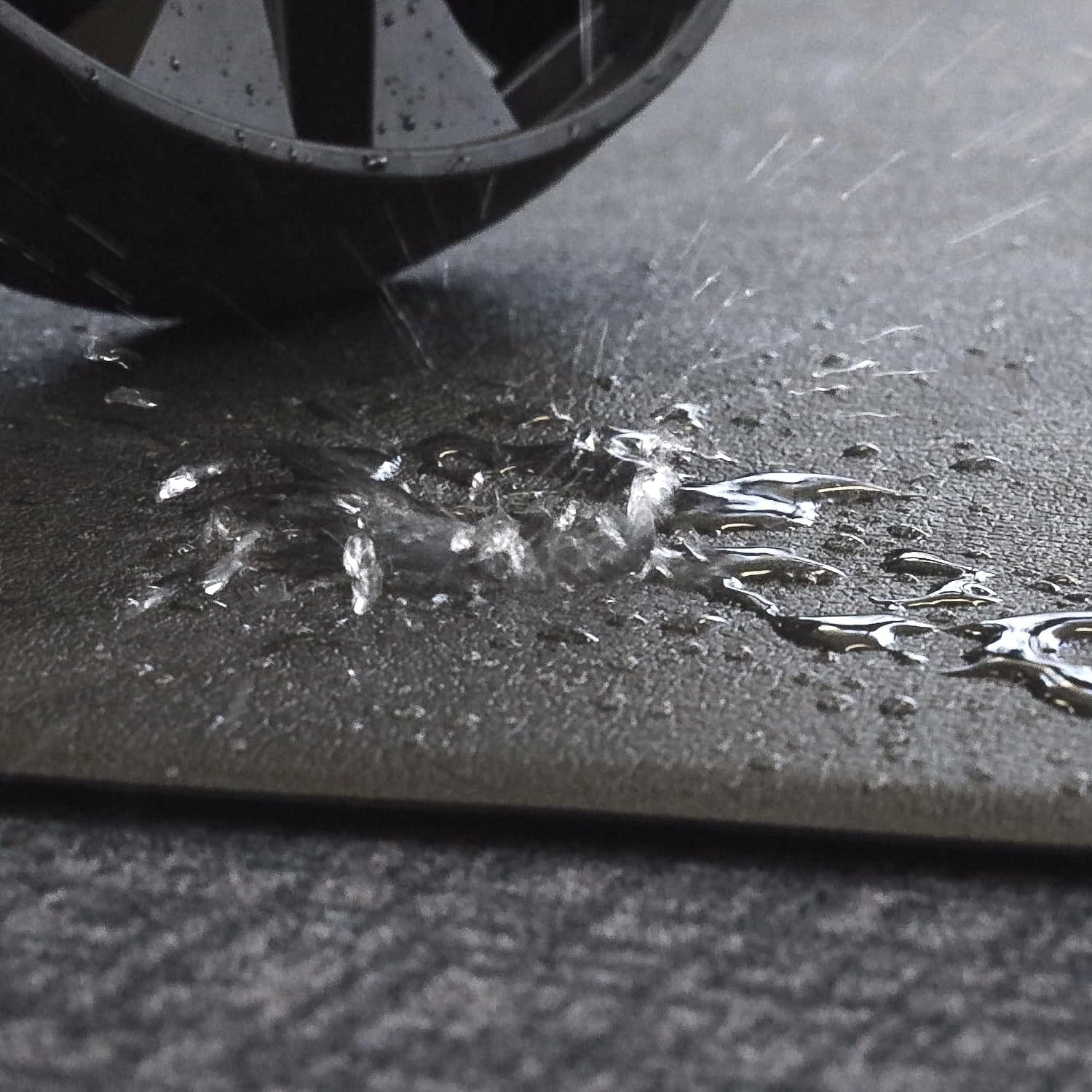
The first is moisture. Sweat is not just water. It carries salt and oils that will stain carpet, mark timber and work into the seams of laminate flooring. A waterproof mat keeps all of it on the surface where a cloth can deal with it. This one is listed as waterproof, which is the single most useful feature for anyone doing hard indoor sessions.
The second is vibration. A spin bike with a heavy flywheel, or a trainer with a road bike bolted into it, pushes a low rumble straight into the floor structure. Hard floors transmit that beautifully, which is lovely for a concert hall and awful for an apartment. Putting 7 mm of soft PVC in the path breaks the direct contact and takes the edge off. You will not get silence. You will get a noticeable drop in the deep thrum that travels through walls and ceilings.
The third is grip. Machines move. Rowers slide back on the stroke, bikes creep forward under out-of-the-saddle efforts, treadmills walk sideways over weeks. A mat that holds the floor and holds the machine stops most of that drift.
Why thickness matters more than area
People shop for mats by looking at length and width. That is understandable, but thickness is what separates a mat that works from one that is just a barrier.
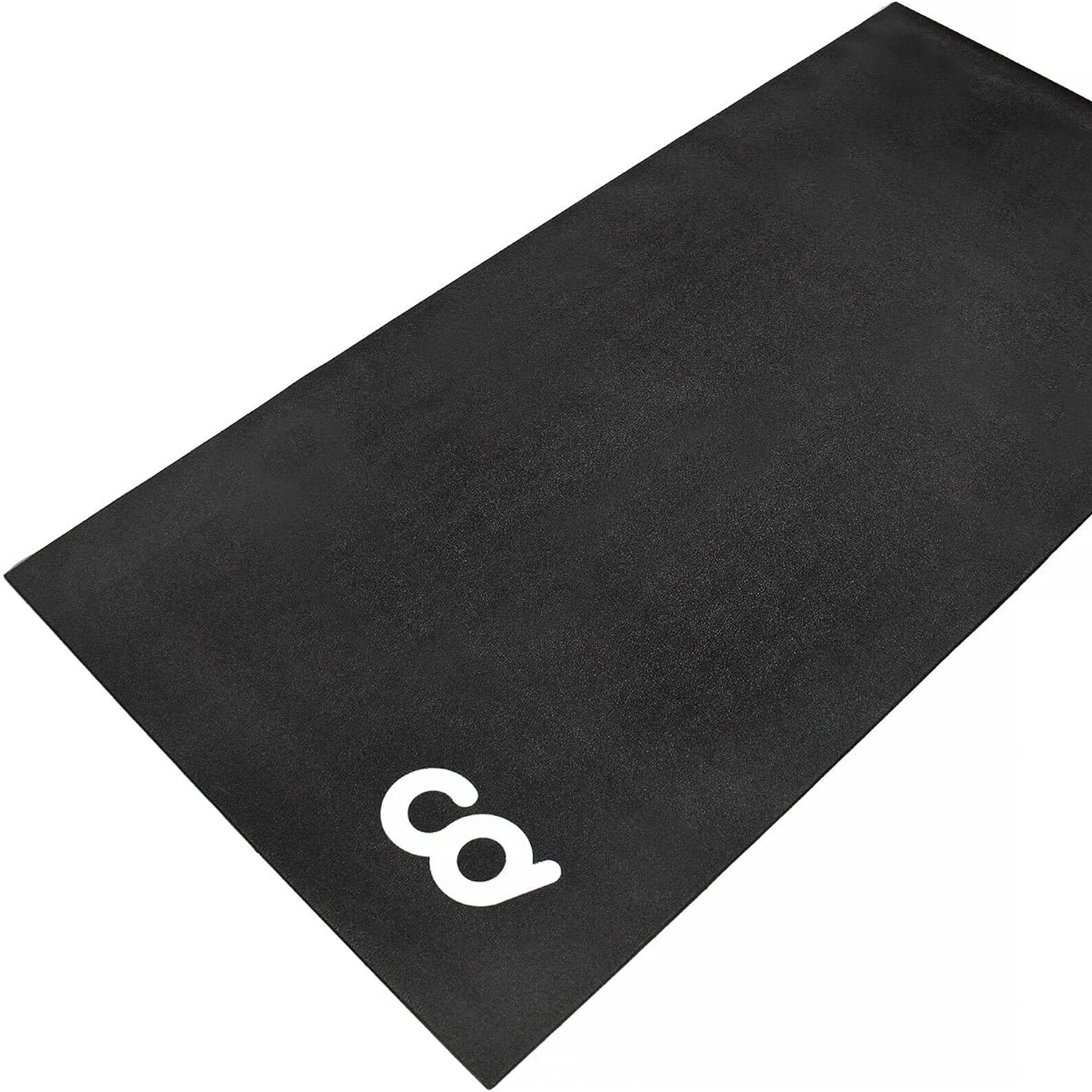
Thin mats, the 2 or 3 mm kind, will stop sweat and that is roughly it. They have no body to absorb anything. Once you get to 6 or 7 mm you have enough material to compress slightly under load and dissipate energy rather than pass it straight through. This mat sits at 0.7 cm, which is 7 mm, in the soft version of the material. That combination gives you cushioning without the mat being so thick that your machine starts to feel unstable.
There is a trade-off worth knowing. Very soft, very thick mats can let a machine rock a little, especially tall spin bikes with a narrow base. Seven millimetres is a sensible middle ground for most home setups.
Measuring before you buy
This is where people get caught out, so do it properly.
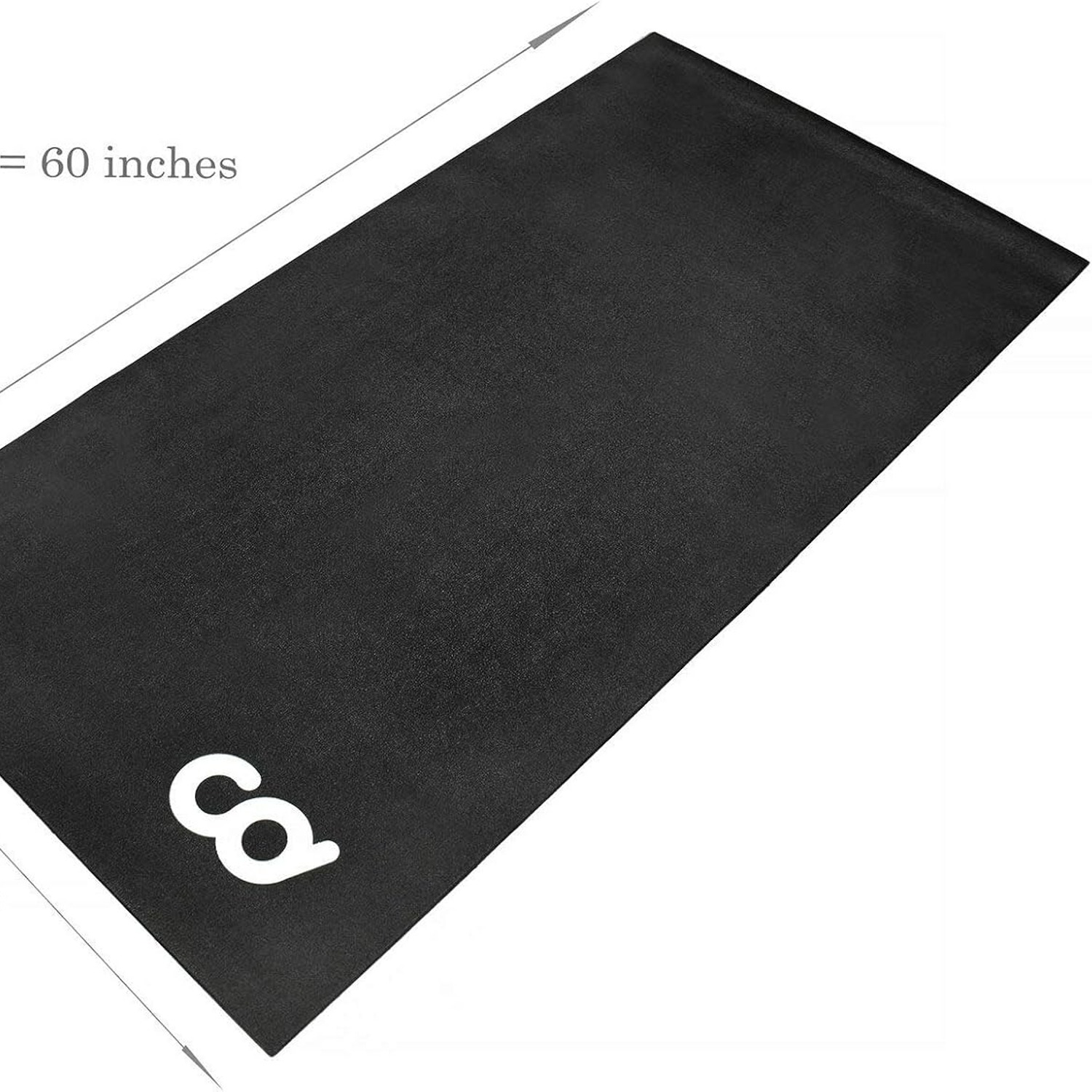
The mat measures 30 x 60 inches, about 76 x 152 cm. Go and measure the actual footprint of your machine, meaning the outside edges of the stabiliser feet, not the overall silhouette of the frame.
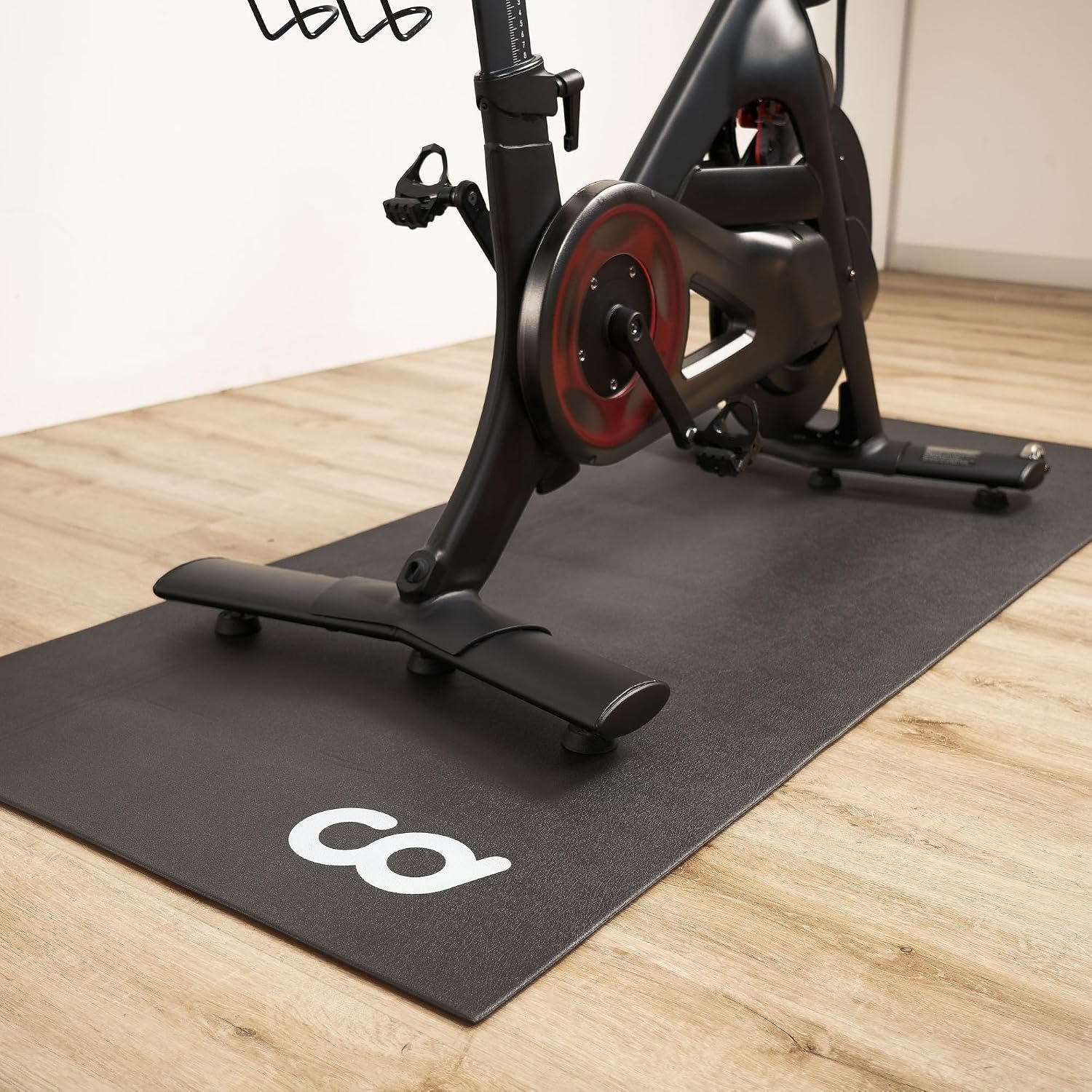
Most upright exercise bikes, spin bikes and turbo trainers fit comfortably inside that with room to spare. Full-size commercial treadmills and long rowing machines often do not. If you have a rower with a 240 cm rail, you have two options. Place the mat under the front end and the seat area, where weight and sweat concentrate, or buy two mats and run them end to end. Both work. The second is tidier.
For treadmills specifically, measure the width across the motor cowling as well as the base. Some are wider than 76 cm and will overhang. People hunting for the best treadmill mat for carpet frequently need a wider sheet than a cycling mat provides, so check the numbers rather than guessing.
Floor by floor
Timber and laminate. This is where a mat does the most good. Hard floors mark easily under point loads and they resent moisture. Lay the mat flat, set the machine on it, and lift the mat every few weeks to let the boards breathe.
Tiles. Grout lines collect sweat and go grey. A mat stops that and also cuts the sharp echo you get off a hard tiled surface. The mat grips tiles well as long as they are clean.
Carpet. The waterproof layer matters most here, because carpet absorbs everything and holds onto it. Check your machine still sits level once the mat is on top of the pile. On very deep carpet you may want to add a thin board beneath for a firmer base.
Concrete or garage. Comfortable enough for stepping on in bare feet, which concrete is not, and it keeps dust off your machine's underside. Sweep first, because grit trapped between any mat and concrete is abrasive.
Setting it up well
Unroll the mat the opposite way to how it came packed, lay it flat and leave it alone for a day. Room temperature helps the PVC relax, so bring it inside rather than flattening it in a cold garage.
New PVC from a sealed carton often has a faint smell for the first few minutes. Open a window, let it air and it goes.
Position the machine so every foot sits well inside the edge of the mat. Feet balanced on the edge are the main cause of mats curling and machines rocking. If your floor is not perfectly level, adjust the machine's own levelling feet rather than packing anything under the mat.
Keeping it in good shape
Maintenance is minimal. Wipe the surface with a damp cloth after sweaty sessions and let it air dry. Avoid bleach and harsh chemicals, which dry out PVC and can discolour it. A mild soapy water wipe followed by a clean damp cloth is plenty.
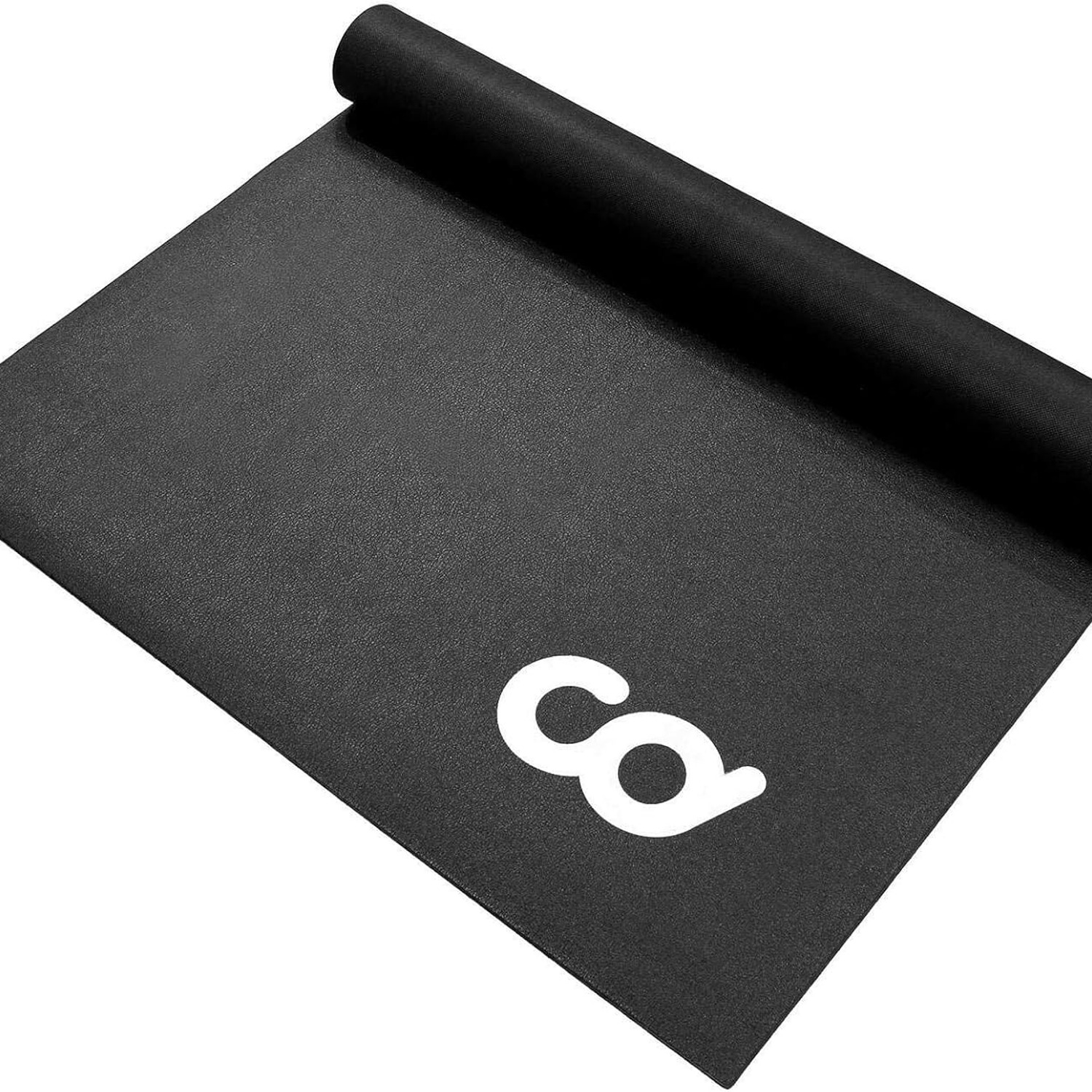
If you need to store the mat, roll it loosely rather than folding. Folds in PVC can set as permanent creases, and a creased mat does not lie flat again. Keep it out of prolonged direct sunlight where you can.
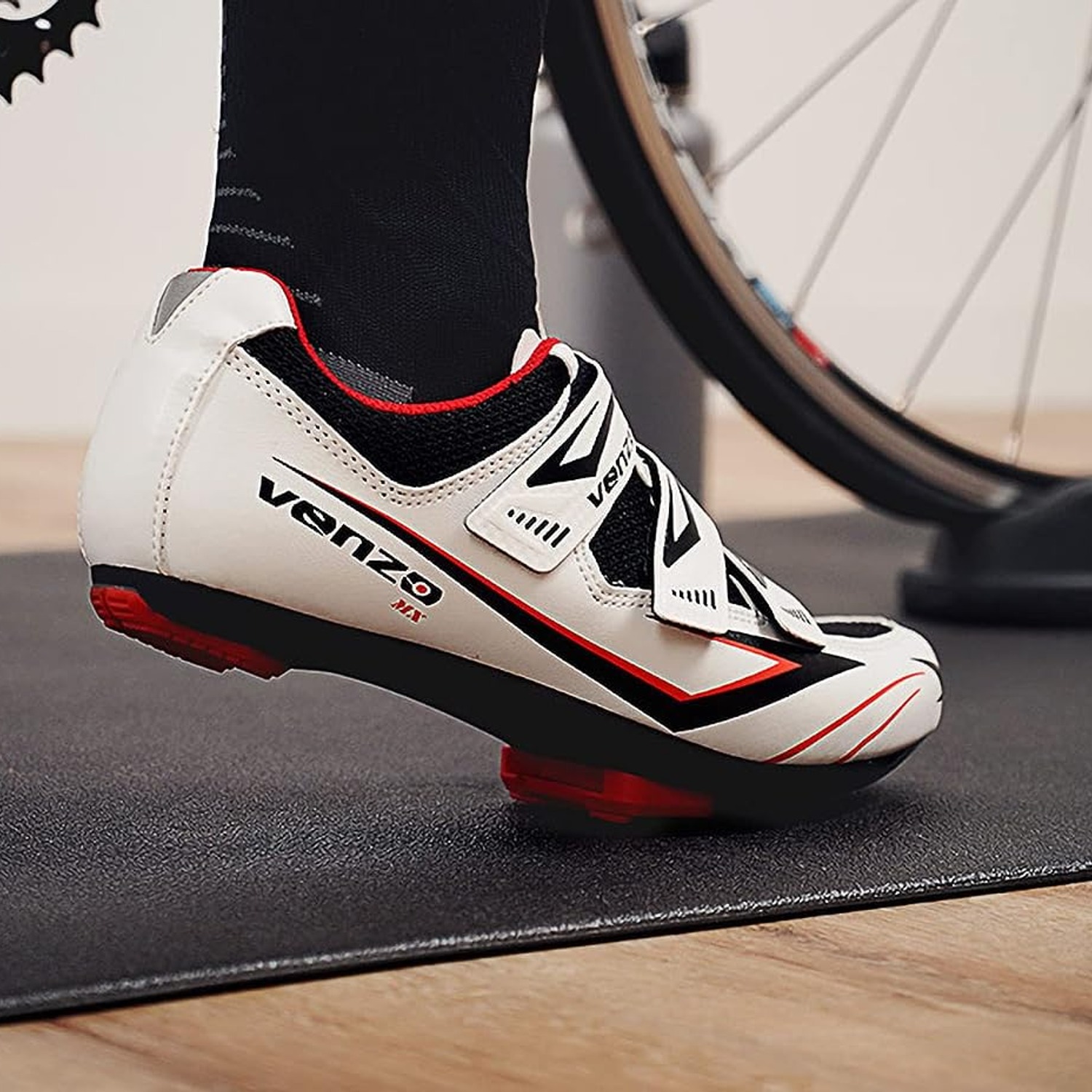
For anyone stepping on and off in cycling shoes, be a bit deliberate about it. Metal cleats dragged hard across any PVC surface will scuff it eventually. Step, do not scrape.
Who this suits
Apartment riders who need to keep the peace with neighbours. Anyone with timber or laminate floors and a machine that weighs more than they do. People who sweat heavily, which after twenty minutes on a trainer is most of us. Families who need to set the bike up in a shared room and roll it all away afterwards without leaving evidence.
It is less essential if your gear lives permanently in a garage on bare concrete and noise is irrelevant. Even then, a mat makes the space more pleasant to use and keeps dust out of the mechanism.
The short version
A trainer mat is a small purchase that protects a large one. This is 7 mm of soft PVC at 76 x 152 cm, waterproof, non-slip and light at 1.72 kg. Measure your machine's footprint against that size, lay the mat flat for a day before use, wipe it down after sessions and keep bleach away from it.
Do that and the floor underneath will look the same in three years as it does today, which is more than most home gyms can claim.